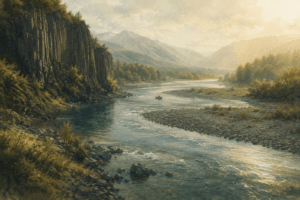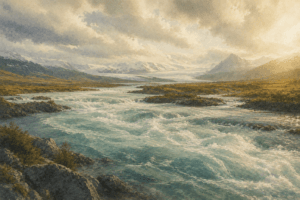
If the Limay is Patagonia’s river of giants, the Traful is its river of legend. Barely ten miles long and rarely wider than a good cast, this turquoise ribbon spilling out of Lake Traful is one of the most storied trout waters in Argentina — a cornerstone of Patagonian fly fishing since the mid-twentieth century, and the one river in the north that still holds a genuine population of landlocked Atlantic salmon. It is small, exclusive, technical and clear as glass, and for the angler who earns a fish here, few days are more memorable.
The Traful at a glance
- Where: the north-west corner of Nahuel Huapi National Park, in Neuquén province, around the hamlet of Villa Traful.
- Source & mouth: flows out of Lake Traful and runs east about 16 km (10 miles) to its confluence with the Río Limay at Confluencia.
- Character: crystal-clear mountain river, 20–30 m wide, a mix of fast rapids and long turquoise pools.
- Fish: landlocked salmon (its signature), plus big, wild brown and rainbow trout.
- Rules: fly-only and mandatory catch-and-release, all season; navigation prohibited.
- Season: roughly the second Sunday of November to the third Sunday of April.
Geography and the national park
The Traful lies inside Nahuel Huapi National Park, in its north-west sector, and within the province of Neuquén. It is born at the eastern end of Lake Traful — a deep, cold, blue-green lake ringed by mountains — and runs east down its own valley, connecting the lake with the Alicurá reservoir on the Limay. Along its short course it is fed by small tributaries, among them the fly-only, catch-and-release Pichi Traful and the Río Minero. At the end of its run it joins the Río Limay at the sector known as Confluencia — the Traful is a tributary of the Limay, adding its cold, salmon-rich water to the bigger river.
Because it sits within the national park, the Traful is tightly protected, and much of the river runs through private estancias — most famously Estancia Arroyo Verde, a name synonymous with Traful fishing for generations. Public bank access is limited to a single point, at the river’s confluence with the Río Minero; the rest is fished through the lodges and estancias that hold the water.
The landlocked salmon — the Traful’s signature
What draws anglers from around the world to such a small river is a single, unusual fish: the landlocked Atlantic salmon (Salmo salar, the “sebago” strain), known in Spanish as salmón encerrado. Introduced from Maine a century ago, it took hold in only a handful of waters, and the Traful and its lake are the one system in Northern Patagonia with a genuinely healthy, self-sustaining population. These salmon are famously combative — fast, dogged and prone to jumping — and run to 22–24 inches, with fish of 28 inches landed. Catching one on a fly is a true Patagonian trophy. Read our full guide to the landlocked salmon in Argentina.
The trout — big, wild and wary
The Traful is far more than a salmon river. Its clear pools hold strong wild brown trout and rainbow trout that average 20–23 inches — large fish for such a small river — and, because the water is so transparent, catching them is highly technical, sight-fishing work. This is not a beginner’s river: fish see everything, and success comes from careful stalking, long leaders and an accurate first cast.
Seasons and conditions
The fly-fishing season runs from about the second Sunday of November to the third Sunday of April, with some operations fishing through to May. Conditions shift markedly through the year: the river runs high and fast at the opening as the winter snows melt, drops through December, and usually holds fast, pushy water until the middle of January depending on the winter’s snowpack. From then it slows and clears until the first autumn rains — the low, clear water of late summer and early autumn offering the most demanding, and most rewarding, sight fishing.
How the Traful is fished
Because of its clarity and its wary fish, the Traful rewards a stealthy, precise approach more than brute power:
- Sight fishing: spotting individual big trout and salmon in the pools and casting to them with a delicate, accurate presentation.
- Dry fly and dry-dropper: during a hatch or with terrestrials, the clear water makes for classic, visual dry-fly fishing.
- Nymphing and streamers: weighted nymphs and swung or stripped streamers reach fish holding deep in the pools, and streamers are a key method for the salmon, which take out of aggression rather than hunger.
Fishing regulations
The Traful is one of Argentina’s most strictly protected rivers, and the rules reflect its fragility:
- Fly fishing only, and mandatory catch-and-release all season — every fish goes back.
- Navigation is prohibited on the river in all forms.
- Public access is limited to the confluence with the Río Minero; elsewhere the water is reached through estancias and lodges.
- On Lake Traful, a limited rainbow harvest is allowed within size and season limits, with barbless hooks, and fishing is banned within 100 m of the famous Bosque Sumergido (submerged forest).
- As across Patagonia: single barbless hooks, no felt-soled wading boots (didymo), and gear must be disinfected before and after fishing.
Dates and limits are set each season, so confirm the current regulation before you fish; for licences, see our guide to fishing licences in Argentina.
Getting there
The Traful is reached from Villa Traful, a tiny lakeside village in Neuquén about two hours from Bariloche, either along the scenic Seven Lakes road or via the Confluencia route where the Traful meets the Limay. Most anglers fish it on a booked programme through one of the estancias or lodges that control the water. See our Bariloche fishing guide for the wider region.
Frequently asked questions about the Traful River
Why is the Traful River famous?
It is one of Patagonia’s most storied trout rivers, a cornerstone of the sport since the mid-twentieth century, and the one river in Northern Patagonia with a genuine population of landlocked Atlantic salmon — all in a small, exclusive, crystal-clear setting inside Nahuel Huapi National Park.
What fish can you catch in the Traful?
Landlocked salmon (its signature species), plus big wild brown and rainbow trout that average 20–23 inches. The salmon run 22–24 inches, with fish to 28 inches.
Is the Traful inside a national park?
Yes. The Traful lies in the north-west sector of Nahuel Huapi National Park, in Neuquén province. It is strictly protected — fly-only, catch-and-release, with navigation prohibited.
Can anyone fish the Traful, or is it private?
Public bank access is limited to the confluence with the Río Minero. Most of the river runs through private estancias, such as the famous Estancia Arroyo Verde, and is fished on a booked programme through the lodges and estancias that hold the water.
Is the Traful good for beginners?
No. The water is exceptionally clear and the fish are wary, so it is technical, sight-fishing water that rewards experienced anglers with stealth, long leaders and an accurate first cast.
When is the best time to fish the Traful?
The season runs from about the second Sunday of November to the third Sunday of April. Early season is high and fast; the low, clear water of late summer and early autumn (February–April) offers the most rewarding sight fishing.
Plan your Traful River trip
A landlocked salmon or a big wild brown from the clear pools of the Traful is one of Patagonia’s rarest and most coveted prizes. Tell us your dates, budget and experience, and we’ll match you with the estancias and guides who fish this legendary little river.